At some point, many couples reach a place where talking alone no longer works. I often hear partners say they care deeply, yet conversations turn tense or silent. That moment usually leads to a search for help that feels safe and effective. Couples counseling often appears as the next step, but the format raises questions.
Right now, therapy looks different than it did years ago. Screens now replace offices for many sessions, and this shift changes how support feels and functions. I notice that people worry about whether online conversations can hold real emotion or if face-to-face meetings still matter more.
This comparison between online couples counseling vs in-person therapy matters because commitment, trust, and time all play a role. Both approaches can support growth when used with care. The real goal is clarity, comfort, and steady progress rather than choosing a format based on fear or trends.
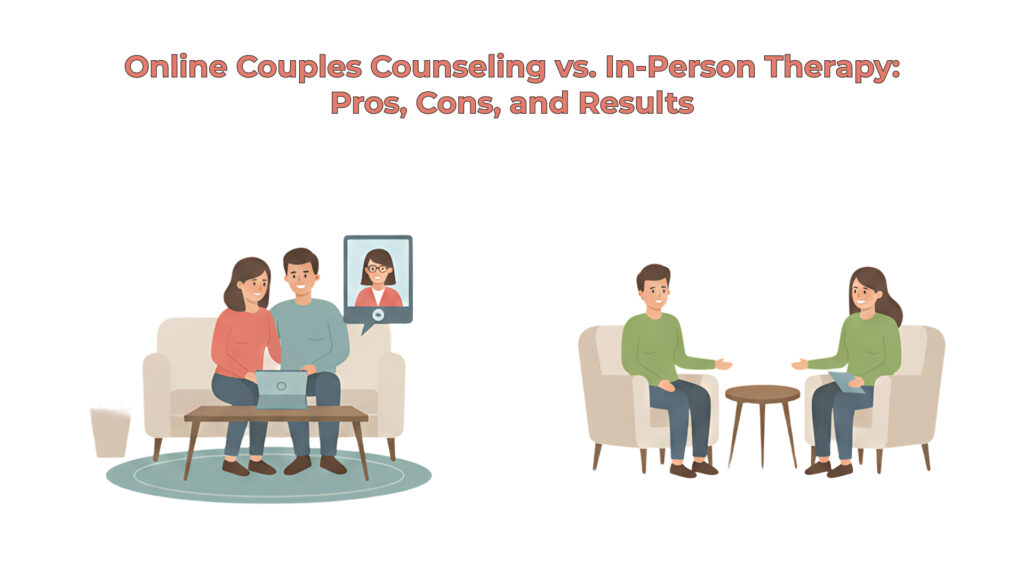
Choosing Between Online and In-Person Couples Counseling
Every relationship brings its own needs, and the choice of format can shape the experience. Some couples value flexibility, while others rely on shared physical space to stay focused. The rise of digital support shows that help can adapt, yet traditional sessions still offer structure.
The growth of online therapy reflects changing work schedules and wider access to care. At the same time, office-based sessions remain trusted and familiar. Both couples counseling options can work well when partners feel safe, heard, and ready to engage fully.
What Is Online Couples Counseling?
Virtual sessions connect partners and a therapist through secure video platforms. I often explain that the structure mirrors office meetings, with guided discussion, skill practice, and reflection. The main difference is location rather than method.
Sessions usually follow a set time, just like traditional appointments. Privacy depends on using a quiet space and stable connection. Online therapy for couples supports access for those who live far away or manage demanding routines.
What Is In-Person Couples Counseling?
Traditional sessions take place in a shared office where all participants sit together. Many couples find comfort in this neutral setting because it separates therapy from daily life. Face-to-face interaction allows full attention on tone, posture, and pauses.
The physical environment often helps partners stay present during emotional discussions. This format has long served as the standard for relationship therapy and still holds value for those who prefer direct human presence.
Key Differences Between Online and In-Person Couples Counseling
A clear comparison helps reduce uncertainty and supports confident decisions. While goals remain similar, the experience changes based on how sessions unfold and where they occur.
Convenience and Accessibility
Scheduling flexibility stands out for digital sessions. Couples often save travel time and fit meetings into busy days. Location barriers fade, which helps partners living apart or in rural areas stay consistent.
Office visits require planning and travel, which can feel grounding for some. Others find the added effort stressful. Accessibility often depends on lifestyle rather than motivation alone.
Emotional Connection and Presence
Screens can limit how body language appears, yet many partners feel more relaxed at home. Comfort can encourage openness for people who feel anxious in offices. Emotional depth depends more on honesty than distance.
Shared physical space allows therapists to notice subtle shifts in posture and energy. Some couples feel stronger connection when emotions unfold without digital filters. Personality and comfort level often decide which feels better.
Privacy and Comfort
Being at home offers familiarity, but interruptions can happen. I suggest clear boundaries to protect session time. Emotional safety grows when partners prepare their space with care.
Office settings reduce household distractions and provide a neutral ground. For couples dealing with sensitive topics, that separation can support focus and trust.
Technology and Practical Limitations
Stable internet supports smooth sessions, yet outages or screen fatigue can interrupt progress. Some conversations feel heavy through a device, especially during conflict.
In-person meetings avoid technical issues but depend on physical availability. Intense discussions sometimes feel easier without screens, especially when emotions rise quickly.
Effectiveness: Do Online and In-Person Counseling Produce Similar Results?
Research shows that both formats can support positive change when engagement stays strong. Skill-building, communication practice, and guided reflection work in either setting. The therapist’s approach and the couple’s effort matter most.
Emotional intensity may feel different, yet progress often depends on consistency. Therapists adjust tools based on format, and committed clients usually see similar outcomes over time.
When Online Couples Counseling May Be the Better Option
Busy schedules often push couples toward virtual care. Long work hours or distance can limit office visits. Online sessions help partners stay involved without added stress.
Mild to moderate conflict often responds well to digital support, especially when both partners communicate comfortably through screens. Familiar surroundings can reduce tension and support honest dialogue.
When In-Person Couples Counseling May Be More Effective
High-conflict situations sometimes need direct presence to manage emotion. Trust repair after betrayal often benefits from shared physical space and immediate support.
Trauma-related work or difficulty with emotional regulation may feel safer in an office. The environment can help ground partners during intense moments.
What to Consider When Choosing the Right Format
Relationship issues vary in intensity and history. I encourage couples to reflect on emotional needs, privacy concerns, and comfort with technology. Personal preference plays a strong role in staying consistent.
The right choice supports openness, safety, and regular attendance. A format that feels manageable often leads to better engagement and steadier growth.
Can Couples Switch Between Online and In-Person Counseling?
Flexibility exists for many couples. Some begin online and later move to office sessions. Others combine both through hybrid care based on changing needs.
Therapist guidance helps decide when a shift makes sense. Growth does not require sticking to one format forever.
Frequently Asked Questions
Is online couples counseling as effective as in-person therapy?
Studies suggest similar results when couples stay engaged. Commitment, therapist skill, and consistent attendance often influence success more than the session format.
Do therapists treat couples differently online?
Therapists adjust techniques to fit screens, but goals stay the same. Communication skills, emotional awareness, and problem-solving remain central.
Can online sessions handle serious relationship problems?
Many serious issues can be addressed online, though high conflict or trauma may benefit from office support. A therapist can guide that decision.
Is privacy safe with virtual couples counseling?
Secure platforms protect sessions, but couples must manage their own space. Quiet rooms and clear boundaries support confidentiality.
How do couples choose between online and in-person therapy?
Couples often consider schedules, comfort, emotional needs, and access. The best option supports consistency and honest participation.
The Best Choice Is the One That Supports Consistency and Growth
Progress grows through regular effort and trust in the process. Whether sessions happen online or face to face, couples counseling works best when both partners commit fully. Support, clarity, and steady communication matter more than location. Moving forward with care often begins with taking that first step together.